Advanced ultrasound imaging
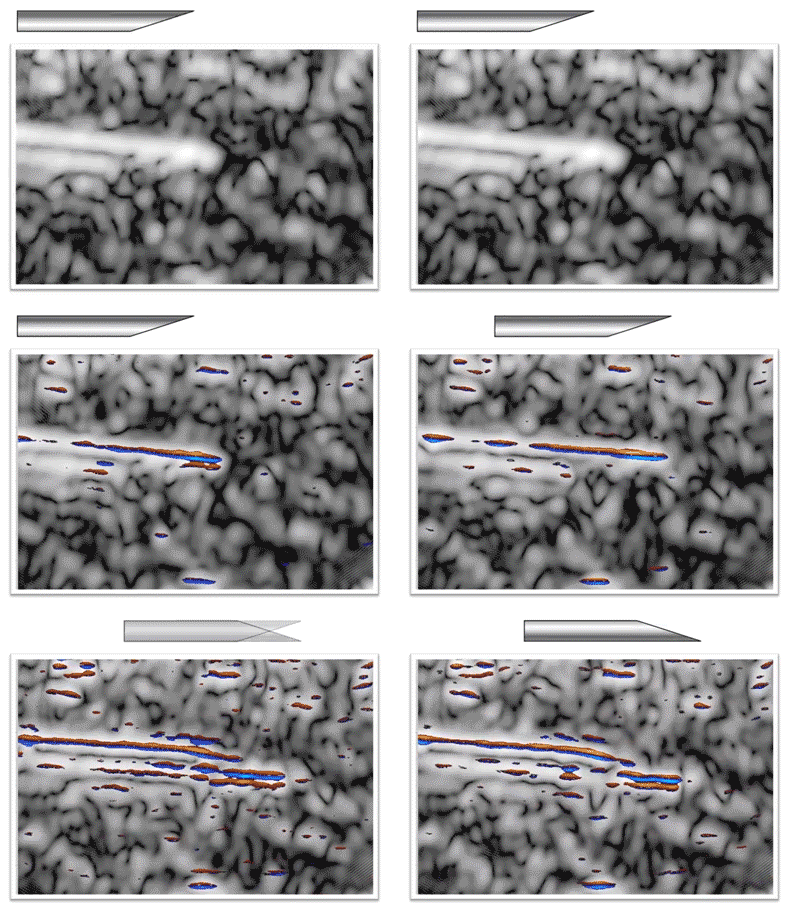
A significant part of our research focuses on new image formation methods. Current ultrasound imaging systems still rely largely on conventional methods, such as Delay-and-Sum, which impose trade-offs between resolution, imaging depth, field of view, and robustness.The group develops correlation-based reconstruction approaches (Correlation-Based imaging). These methods use measured radiofrequency signals and calibrated databases to improve image quality. They have already increased resolution, contrast, and field of view in several contexts, including medical imaging, cardiac ultrasound, needle tracking, and contrast-agent imaging.This work paves the way for more reliable ultrasound systems that are less operator-dependent and better suited to point-of-care settings, remote regions, and clinical environments where portability is essential.
Transducers, wave propagation and micromichining
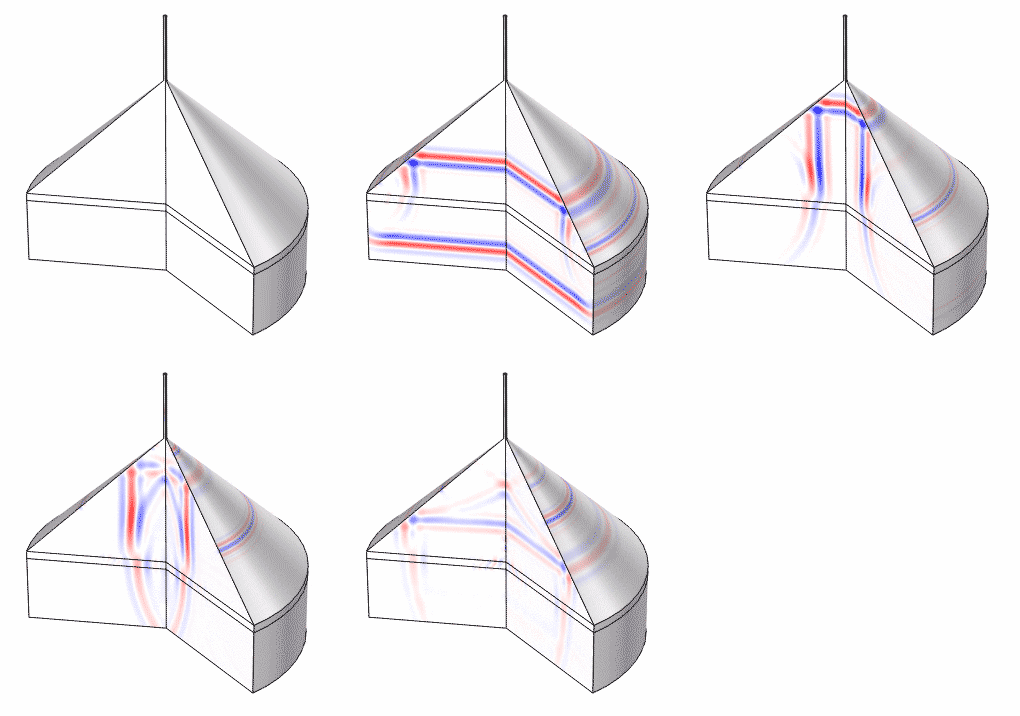
The group designs and optimizes new ultrasonic transducer architectures for medical and industrial applications. This work combines finite element modeling, acoustic simulation, laser micromachining, additive manufacturing, and experimental characterization.We are particularly interested in multi-element probes, piezoceramic and piezopolymer transducers, architectures with separate transmit and receive elements, as well as dry-coupled or contactless probes. The objective is to create probes that are better suited to modern reconstruction algorithms and capable of operating in conditions where conventional approaches reach their limits.These developments have applications in medical imaging, power ultrasound, non-destructive testing, and structural health monitoring.
Therapeutic ultrasound and biomedical applications
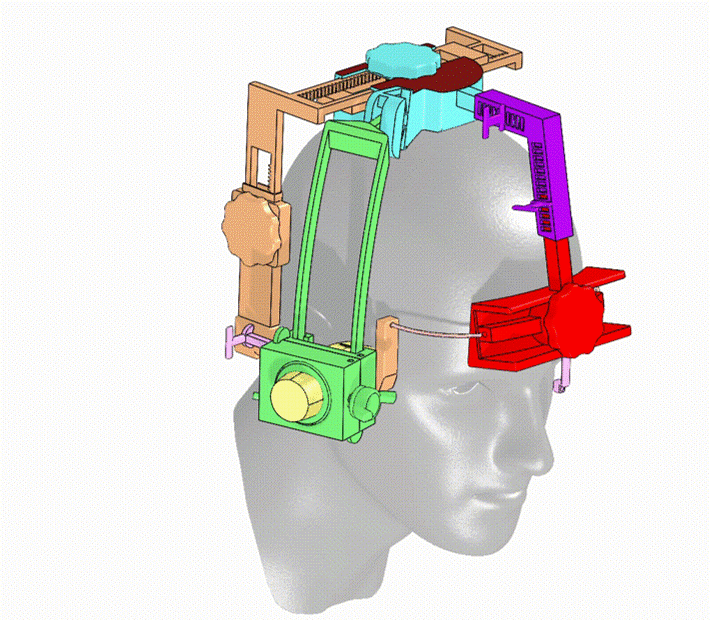
The group also contributes to the development of ultrasound technologies for diagnosis and therapy. Recent projects focus in particular on transcranial focused ultrasound, ultrasound-guided imaging, neuromodulation, chronic pain, and the treatment of ischemic stroke.These projects aim to develop portable, non-invasive systems that are better adapted to the needs of patients and clinicians. They combine engineering, physiology, neurology, medical imaging, and signal processing to propose new healthcare solutions.
Instrumentation, acoustics and technology transfer
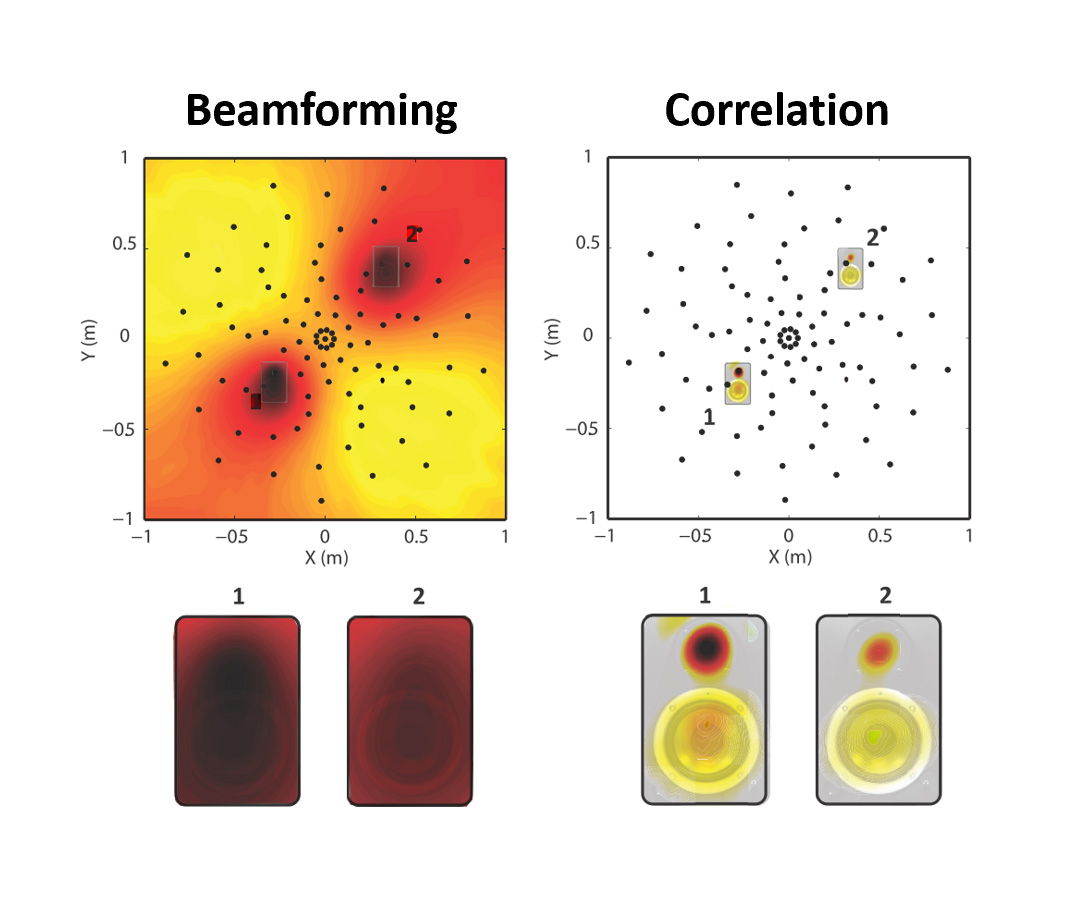
The group also develops measurement instruments and acoustic systems for industrial applications. This work includes embedded acoustic cameras, sound source identification, contactless inspection, power ultrasound, and quality control systems.Through the Mechanical Engineering Instrumentation Platform at the Université de Sherbrooke (PIMUS), the group collaborates with industrial partners to transform research ideas into concrete solutions. These collaborations allow students to gain experience in applied projects while promoting technology transfer to industry.